
Interior Designer Contracts: 5 Essential Clauses (with Examples!)
Interior designers are balancing a lot — creative vision, client expectations, budgets, timelines, and a rotating cast of vendors. And your contract? That’s the thing holding it all together behind the scenes.
When something goes off track (a delay, a mistake, a last-minute pivot, oh my!), your contract is what determines if you’re protected or stuck absorbing the fallout.
I’ve broken down five essential clauses that every interior designer contract should include, plus examples of how they work in action.
1. Responsibility for Vendor Work
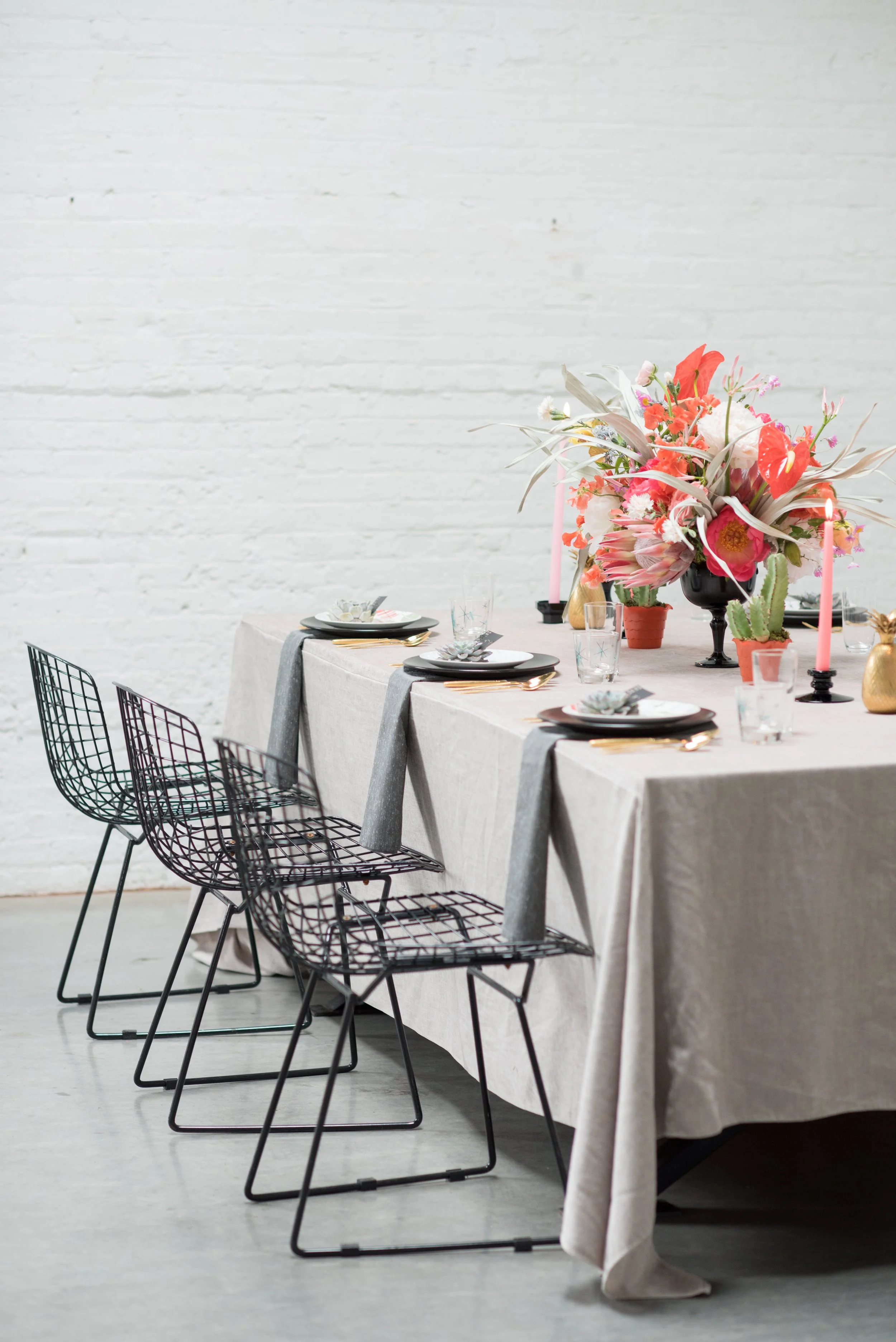
A dining room interior styled by Color Pop Events, photographed by Mikkel Paige Photography.
You may be managing the project, but that doesn’t mean you should be responsible for every vendor’s mistake.
Your contract should clearly state that you are not liable for errors made by third-party vendors, especially when the vendor is responsible for measurements, fabrication, or installation and the client has approved the vendor’s work or selections.
Imagine a stage vendor mis-measures a space, and now the stage won’t fit. You need to ensure that even though you coordinated the project, the error falls on the vendor, not you.
2. Payment Structure and What’s Outside the Scope
Whether you charge hourly or a flat fee, your contract needs to be very clear about how and when you get paid.
If you’re charging hourly, outline your rate and clarify how time is tracked and billed. If you’re charging a flat fee, define exactly what’s included, and spell out what’s considered out of scope (and how additional fees are calculated).So, when Becky the Bride requests additional rooms or revisions beyond what was originally agreed upon, you can confidently say, “Happy to do that — here’s how that will be billed.” No awkwardness or guessing.
Also, remember to include payment schedules, late payment terms, and travel fees or reimbursement for non-local site visits.
3. Dispute Resolution (Hint: Not Court First)
Nobody wants to end up in a legal dispute — but if it happens, your contract should outline how it will be handled.
Instead of jumping straight to court, many designers opt for a mediation-first approach. Why? Because it’s typically faster, less expensive, and less adversarial. So, when a client is unhappy with part of the design execution, both parties agree to attempt mediation first to resolve the issue.
This clause helps keep things professional and often prevents situations from spiraling out of control.
4. Meeting Rescheduling and Cancellation Policies
Your time is valuable, and your calendar isn’t just a suggestion. If you’re blocking off time for meetings, site visits, or consultations, your contract should address required notice for cancellations or rescheduling and what happens if notice isn’t given.
For hourly designers, this may mean charging your hourly rate for missed or late-canceled meetings. If you’re a flat fee designer? It might mean forfeiting that meeting or requiring a rescheduling fee.
Clear expectations = fewer uncomfortable conversations.
5. Pause in Services and Restart Terms
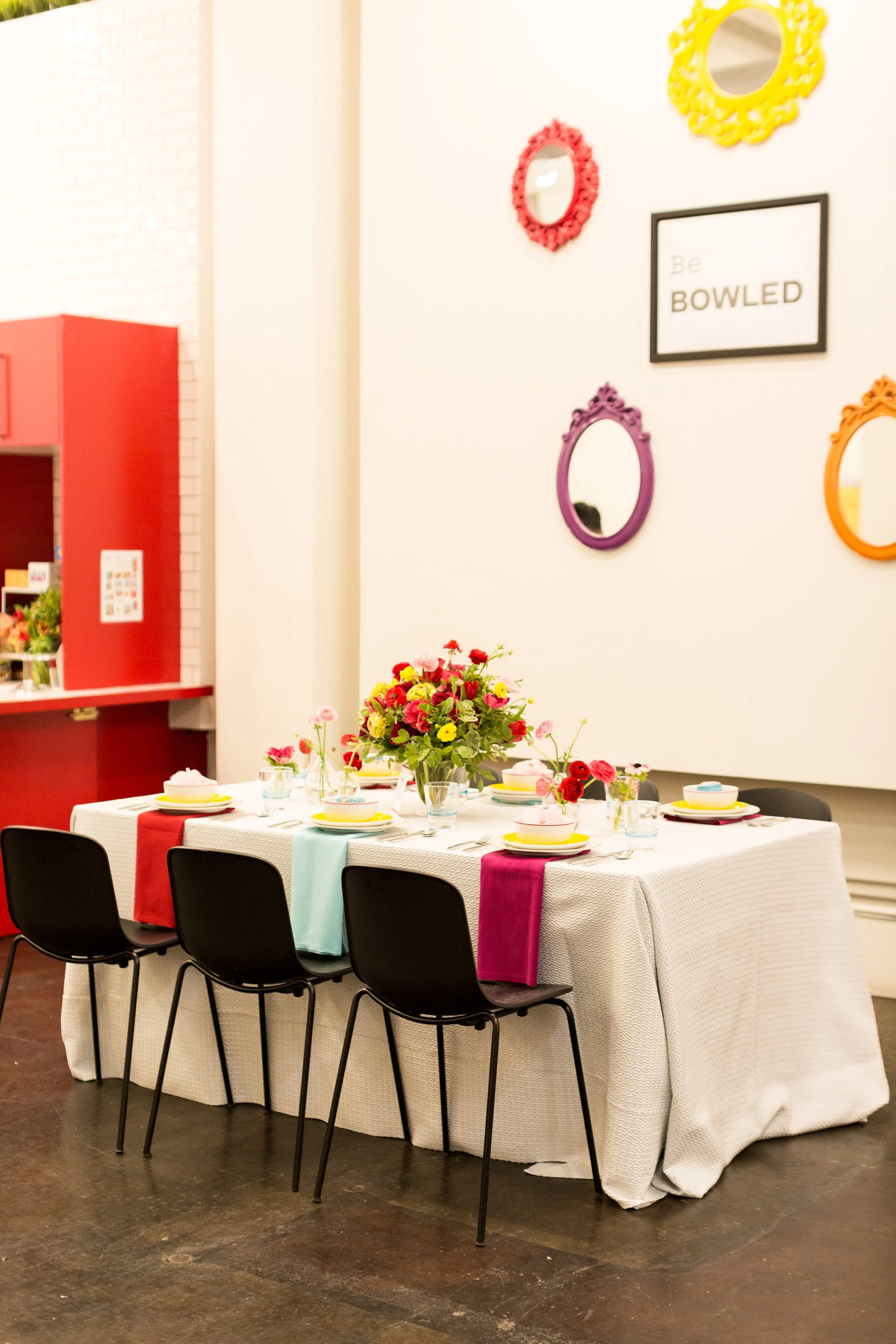
An interior styled by Color Pop Events, photographed by Jessica Hunt.
This one is huge and often overlooked. Projects don’t always move in a straight line. Clients may want to pause for personal, financial, or logistical reasons.
Your contract should address:
What happens if services are paused
How long a project can be on hold
Whether a restart fee applies
That continuation is subject to your availability
When a paused project may be considered in default
Example? I’ve got you. A client pauses their project for several months, then wants to pick back up immediately. Your contract allows you to charge a restart fee and confirms that resuming work depends on your current schedule.
Your time is protected and prevents your workflow from being disrupted.
Guard Your Time, Work, and Yes, Your Sanity
A strong contract doesn’t just cover worst-case scenarios. It supports your day-to-day business operations. It gives you the language to set boundaries, the structure to get paid properly, and the protection you need when things don’t go exactly as planned.
If you’re ready for your contract to work just as beautifully as the spaces you design, give me a shout. Let’s make it happen!
